Connection planning
Review the equipment, controllers and communication interfaces available at the site. Select a connection approach around the existing infrastructure and the data the project actually needs.

DIGITAL SOLUTIONS / XIoT
Indicative product metrics. Targets and scope are confirmed per project.
XIoT connects equipment data with the people and processes that need to act on it. It brings collection, asset context, monitoring and event handling into a defined engineering scope. Start with the equipment and interfaces already available, then build a practical monitoring view around your operational priorities.
CORE CAPABILITIES
Shape the product around your business process, information and responsibilities.
Review the equipment, controllers and communication interfaces available at the site. Select a connection approach around the existing infrastructure and the data the project actually needs.
Organise data around identifiable assets, locations and operating responsibilities. A clear asset structure makes a raw signal more useful to an operations or maintenance team.
Bring selected equipment signals into a readable operating view. Define status meanings, update expectations and the conditions users need to notice during normal operation.
Translate agreed operating conditions into events that can be reviewed and assigned. Plan thresholds, escalation and acknowledgement with the people responsible for responding.
Retain the agreed operating history needed for review and troubleshooting. Use historical context to investigate an event and compare it with the equipment’s recent behaviour.
Connect relevant equipment events with maintenance or business workflows. Define the interface and engineering responsibilities so a monitoring event leads to an appropriate next action.
BUSINESS WORKFLOW
A monitoring use case connects a site signal with asset context, a defined event and the team responsible for following it up.
Read the agreed equipment data through the selected gateway or interface.
Relate the signal to its equipment record, location and operating context.
Apply the thresholds and event conditions agreed with the operations team.
Route a relevant event to the person or workflow responsible for the response.
Use the operating record and response outcome to investigate and follow up.
Make the missing data visible and investigate connectivity before interpreting it as a change in the equipment’s operating state.
Monitoring informs the agreed service process. Protection and safety-critical control stay within the specified electrical systems.
TYPICAL APPLICATIONS
Start with a practical use case and extend the scope as your team develops its working approach.
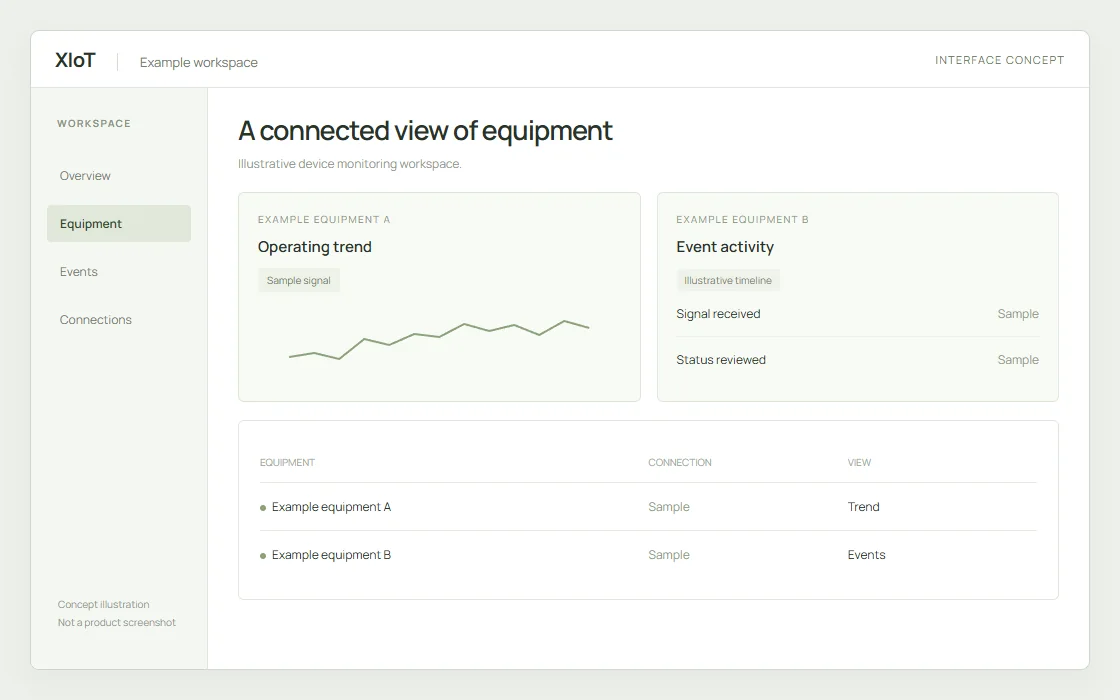
Explore the relationship between asset status, incoming readings and events that need attention. Select the signals and response responsibilities for each installation.
Interface concept with sample data, not an actual product screenshot.
Bring selected production equipment signals into a common monitoring view. Prioritise the data that helps a team understand operating status and investigate exceptions.
Organise monitoring information for building and utility equipment. Relate events to the people responsible for inspection and follow-up.
Prepare a useful operating history for service investigation. Scope remote connectivity, access and support responsibilities around the installation.
Explore monitoring for compatible sensors and interfaces in a power project. Keep protection and safety-critical control within the specified electrical engineering systems.
DELIVERY & INTEGRATION
Language, hosting, access, interfaces and acceptance criteria are part of implementation planning.
Review assets, signals, network conditions and the operational use case. Pilot the connection and monitoring approach with agreed engineering and acceptance checks.
Scope gateways, protocols, identity and any maintenance-system interfaces. Define network access, data ownership and responsibility for the equipment-side connection.
Provide operating and administrator guidance for the deployed monitoring scope. Agree alert handling, connection support and the process for adding further assets.
YOUR NEXT STEP
Share your project location, operating requirements and timeline. We will work with you on a clear scope and next steps.
Discuss your requirements